
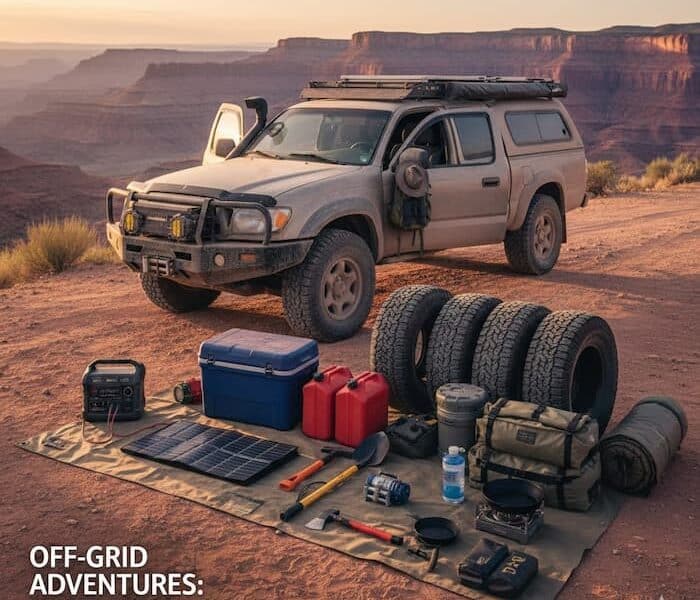
How to Build a Budget-Friendly, Off-Grid Rig for Long-Term Travel (Part 1 of 4)
January 15, 2026Overlanding is more than just a recreational activity; it is a mindset and a way of life. At its core, overlanding represents freedom, self-reliance, and the pursuit of meaningful travel beyond paved roads and crowded destinations. It’s about venturing into remote landscapes, relying on your own skills and preparation, and experiencing places that most travelers will never reach. However, despite what social media may suggest, building an off-grid overland rig for long-term travel does not have to be outrageously expensive.
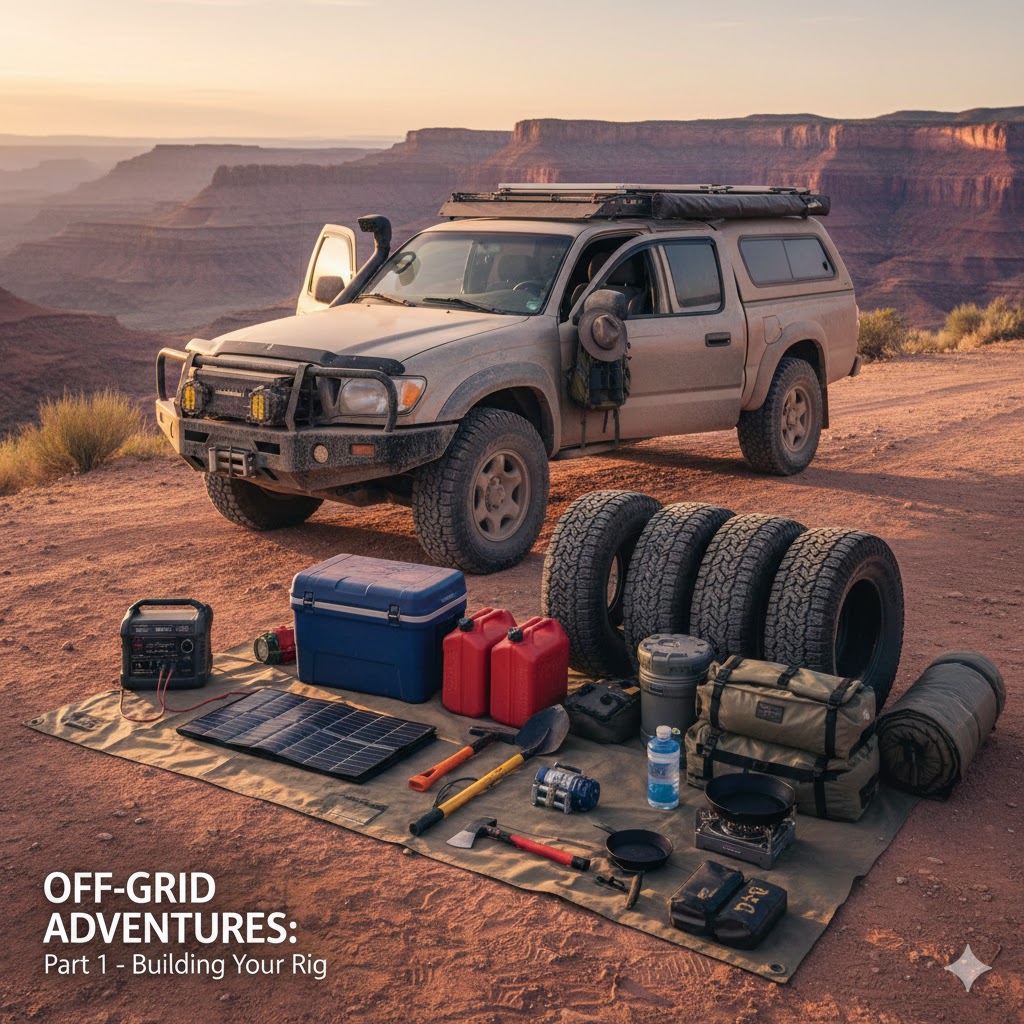
As we move into 2026, overlanding has become more accessible than ever before. Advances in vehicle reliability, affordable off-grid power solutions, and a growing aftermarket for budget-friendly gear mean that you no longer need a six-figure build to travel confidently off the grid. With smart planning, practical upgrades, and a clear understanding of your real needs, it’s entirely possible to create a rugged, capable, and efficient overlanding setup that aligns with both your adventure goals and your budget.
This guide is designed to walk you through every critical step of building a practical overland rig from the ground up. From selecting the right base vehicle to setting up essential systems such as power, water storage, shelter, cooking, and recovery equipment, we focus on solutions that balance performance, reliability, and affordability. The goal is simple: help you build a long-term, off-grid travel rig that works in the real world, not just in photos.
How to Build a Budget-Friendly Off-Grid Rig
Overlanding itself has undergone a major transformation over the past few years. What was once a niche pursuit dominated by mechanical experts and hardcore gear enthusiasts has evolved into a mainstream travel lifestyle. In 2026, the appeal of the “Instagram-perfect” $150,000 overland rig is steadily fading. In its place, a smarter and more sustainable movement is taking hold of the utility-first overlanding build. This approach prioritizes function over flash, reliability over excess, and thoughtful upgrades over unnecessary luxury.
Whether you’re dreaming of navigating the rugged red rock trails of Moab, exploring remote desert routes, or planning an ambitious multi-country journey across the Balkans, the underlying objective remains the same. You need a vehicle that is dependable, easy to maintain, capable of supporting off-grid living, and affordable enough to leave room in your budget for the actual journey. After all, the true value of overlanding lies in the experiences you gain, not the money spent on equipment.
In this guide, we break down exactly how to build a 2026-ready off-grid overlanding rig without draining your life savings. By focusing on practical choices, scalable upgrades, and proven budget strategies, you’ll learn how to create a setup that supports long-term travel, adapts to different terrains, and empowers you to explore with confidence, wherever the trail leads.
1. Choosing Your Base Vehicle: The Foundation of Your Overland Rig
Selecting the right base vehicle is the most critical decision in your overlanding journey, as it serves as the foundation upon which your entire off-grid lifestyle is built. This choice dictates not only your trail capability and mechanical reliability but also your long-term maintenance costs and the extent of customization you can achieve. As we move into 2026, the smartest financial move for aspiring adventurers is investing in “mid-lifecycle” vehicles. These are trucks and SUVs that have already moved past their steepest depreciation curve but still offer essential modern safety features and reliable technology. By choosing a pre-loved platform, you free up a significant portion of your budget for high-quality off-grid upgrades like lithium power systems and high-end recovery gear.
For budget-conscious overlanders, the mid-size market has emerged as the definitive “sweet spot.” Platforms such as the 2nd Generation Toyota Tacoma, early Ford Rangers, and the Nissan Frontier provide a nearly perfect equilibrium between trail maneuverability and payload capacity. These mid-size rigs are narrow enough to navigate the tight, overgrown trails often found in the Balkans, yet they possess the frame strength to carry heavy camping setups across the expansive deserts of Moab. Beyond their physical dimensions, these vehicles are highly efficient; they consume less fuel than their full-size counterparts and benefit from the most extensive aftermarket support in the industry, making it easy to find everything from suspension lifts to modular bed racks.
If you are looking for a “secret” budget-friendly entry into luxury overlanding, the 2015–2018 Lexus GX460 is a standout contender for 2026. While often overlooked as a suburban commuter, the GX460 is essentially a rebadged Toyota Land Cruiser Prado. This means it is built on a bulletproof, world-class 4×4 chassis that is incredibly capable right out of the box. Because they were rarely used for serious off-roading by their first owners, you can often find these vehicles in excellent condition for far less than the cost of a comparable Toyota 4Runner, providing a high-end, V8-powered foundation for a fraction of the expected price.
Top Budget-Friendly Base Vehicles for 2026
When balancing cost with off-grid readiness, several legacy models consistently rise to the top:
- Toyota 4Runner (3rd Gen: 1996–2002): A legend for a reason, these offer a simplistic mechanical design that is easy to repair in the field, supported by a massive community and endless aftermarket parts.
- Toyota Tacoma (2nd Gen: 2005–2015): Known for its exceptional payload and durability, this remains the gold standard for those who need a reliable truck bed for their gear.
- Jeep Cherokee XJ (1984–2001): For those on a strict budget, the XJ offers a lightweight, boxy, and highly capable solid-axle platform that is mechanically straightforward to maintain.
- Ford Ranger (1998–2011): An increasingly popular choice for minimalist builds, the older Ranger is economical, lightweight, and surprisingly rugged for its size.
- Nissan Xterra (2000–2015): Often undervalued compared to Toyotas, the Xterra provides a robust frame and a powerful V6 engine, offering some of the best “bang for your buck” in the used 4×4 market.
The reason these specific models work so well for 2026 overlanding is two-fold: affordability and simplicity. Because these vehicles have depreciated, you can often secure a trail-ready example for between $8,000 and $12,000, leaving you with plenty of capital for modifications. Furthermore, their mechanical simplicity, lacking the over-complicated computer systems of brand-new trucks, makes them the ideal candidates for DIY repairs and accessible part replacements, which is a non-negotiable requirement for anyone planning remote, long-distance travel.
Comparative Analysis: Budget Rigs for 2026
While every vehicle listed above is a capable contender, they each have distinct personalities, strengths, and “red flags” that can make or break an off-grid expedition. To help you choose the platform that best fits your travel style, whether you need the high payload of a truck for a heavy rooftop tent or the maneuverability of an SUV for tight Balkan trails, refer to the comparison table below.
| Vehicle Model | Avg. MPG (Loaded) | Payload Capacity | Key “Red Flag” to Inspect |
| Toyota 4Runner (3rd Gen) | 14–17 | ~1,100 lbs | “Pink Milkshake”: Radiator failure mixing coolant & trans fluid. |
| Toyota Tacoma (2nd Gen) | 15–18 | ~1,300 lbs | Frame Rust: Look for perforation near the rear leaf spring mounts. |
| Jeep Cherokee XJ | 13–16 | ~1,150 lbs | Unibody Cracking: Check the steering box mount area for fatigue. |
| Ford Ranger (1998–2011) | 16–19 | ~1,260 lbs | Timing Chain Rattle: A metallic “marbles in a can” sound on cold starts. |
| Nissan Xterra (2nd Gen) | 14–18 | ~1,000 lbs | SMOD: “Strawberry Milkshake of Death” (Radiator/Trans leak). |
| Lexus GX460 (2015-18) | 13–17 | ~1,300 lbs | Valley Plate Leak: Dried coolant “crust” deep in the engine V-valley. |
2. Suspension & Tires: Ride Comfort + Capability
Once you have secured your base vehicle, the second phase of a “Utility-First” build focuses on where the rubber meets the road—literally. Your suspension and tires are the most important functional upgrades you can make, as they directly dictate your ride comfort on long highway stretches and your capability when the pavement ends. In 2026, the trend has moved away from massive, 6-inch “show lifts” toward functional, modest height increases that prioritize load-handling and reliability over aggressive looks.
Budget Suspension Upgrades: Stability over Stance
For most overlanders, a modest 1.5 to 2.5-inch lift is the “sweet spot.” This height provides enough clearance to navigate rutted trails in the Balkans or rocky steps in Moab without requiring expensive modifications to your brake lines or driveshaft geometry. If you are on a budget, skip the high-end remote-reservoir shocks and focus on a high-quality monotube setup like the Bilstein 5100 series or Eibach Pro-Truck kits.
- Heavy-Duty Shocks & Springs: The secret to a comfortable rig is matching your spring rate to your “wet weight” (your vehicle fully loaded with gear, water, and fuel). Standard factory springs will sag under the weight of a fridge and steel bumpers, leading to a harsh ride and dangerous handling.
- The “Stage 1” Approach: If your local trails are mild-to-moderate, don’t overspend on a full suspension overhaul. Often, a set of stronger rear leaf springs (for trucks) or heavy-duty coil springs (for SUVs) paired with better shock absorbers is all you need to transform your rig’s performance.
Tires: Your Only Point of Contact
In the world of overlanding, tires are your most vital piece of recovery gear. For long-term travel in 2026, All-Terrain (A/T) tires remain the undisputed champion. They offer a sophisticated balance of low road noise for those 500-mile highway days and aggressive enough “bite” for mud, sand, and gravel.
- Top 2026 Contenders: The BFGoodrich All-Terrain KO3 and the Falken Wildpeak A/T4W are currently dominating the market. These newer iterations offer improved sidewall protection and better “Three-Peak Mountain Snowflake” (3PMSF) ratings for winter travel.
- The Budget Pro-Tip: Overlanding is a gear-heavy hobby, and many enthusiasts sell their “take-off” tires with 70–80% tread remaining when they decide to upgrade to a larger size. You can often find a set of four premium A/T tires on local marketplaces for half the retail price. Just ensure you check the date code on the sidewall; in 2026, you shouldn’t buy any tire manufactured before 2021 to ensure the rubber compound hasn’t become brittle.
Why “Airing Down” is a Free Performance
Before you spend thousands on a lift kit, remember that the most effective off-road “mod” is free: lowering your tire pressure. By dropping your PSI (Pounds per Square Inch) from street levels (typically 35) to trail levels (15–20), you significantly increase your tire’s footprint. This creates a “tank track” effect that allows you to float over soft sand and wrap your tread around sharp rocks, providing a massive boost in traction and ride softness without spending a dime.
How to Build a Budget-Friendly, Off-Grid Rig for Long-Term Travel (Part 2 of 4)
[…] the first part of our Budget-Friendly Off-Grid Overlanding Guide, we explored the core building blocks of a reliable long-term travel rig. We covered how to choose […]
[…] 1. Choosing Your Base Vehicle: The Foundation of Your Overland Rig […]
[…] 1. Choosing Your Base Vehicle: The Foundation of Your Overland Rig […]
[…] Spare Tire, Jack, and Tools: A full-size spare is mandatory, along with a reliable high-lift or bottle jack capable of lifting a heavy, loaded overlanding rig. […]
[…] Starting doesn’t mean buying a fully built-out expedition rig. Begin with the basics: How to Build a Budget-Friendly, Off-Grid Rig for Long-Term Travel […]
[…] is arguably the ultimate budget overlanding destination in Europe. Its mountainous interior is a playground for 4×4 […]
[…] planning your 2026 overlanding adventure today and explore America in a way few get to experience: through remote trails, hidden […]