
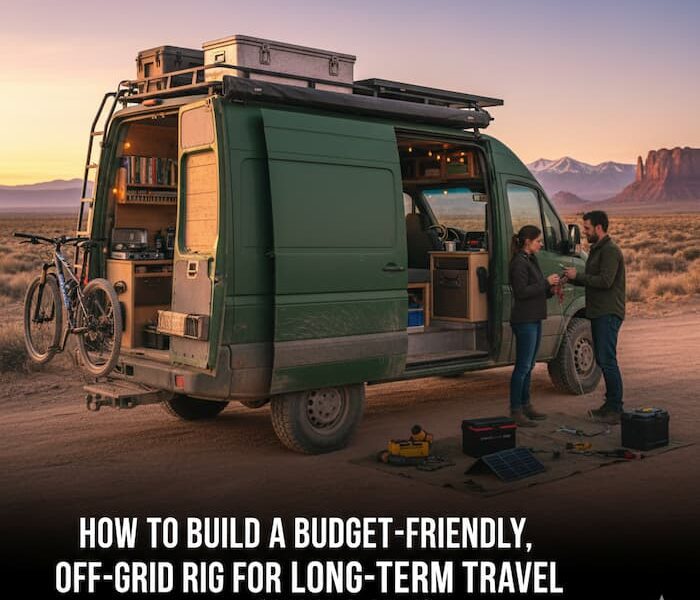
How to Build a Budget-Friendly, Off-Grid Rig for Long-Term Travel (Part 2 of 4)
January 15, 2026In the first part of our Budget-Friendly Off-Grid Overlanding Guide, we explored the core building blocks of a reliable long-term travel rig. We covered how to choose the right base vehicle, why it forms the foundation of any successful overland setup, and how suspension and tire upgrades directly impact ride comfort, load handling, and off-road capability. These elements are essential, as they determine how well your vehicle performs both on long highway stretches and deep into remote terrain.
Because building a truly capable off-grid rig involves many interconnected systems, we intentionally divided this guide into four detailed parts. Overlanding is not a one-size-fits-all project, and trying to cover every critical component in a single post would only dilute the practical value. Breaking the guide into sections allows us to focus on real-world solutions, budget-conscious choices, and scalable upgrades that work for long-term travel, not just short weekend trips.
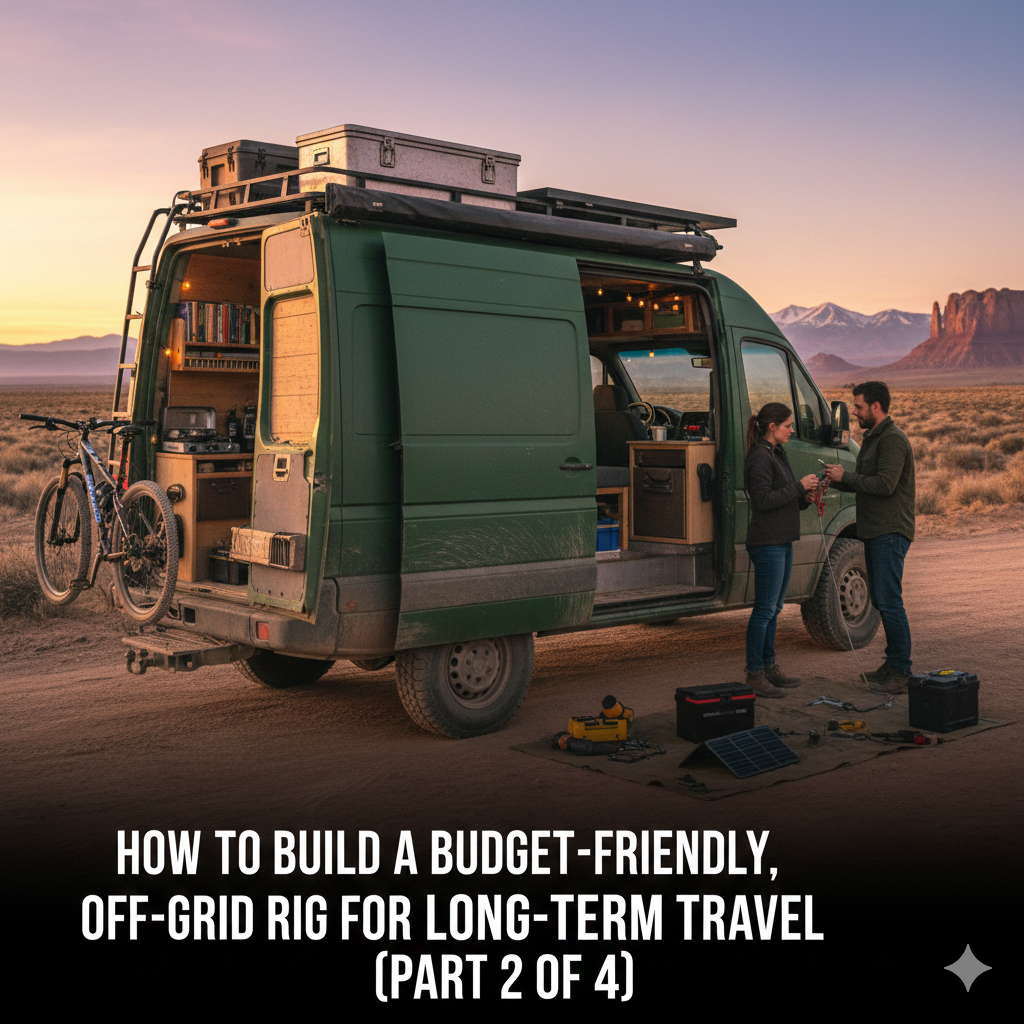
In this second part of the series, we shift our focus from mobility to self-sufficiency and comfort. We will take a detailed look at off-grid power systems, including battery options and solar setups that allow you to stay independent for days or even weeks at a time. We will also cover water storage and filtration, one of the most overlooked yet vital aspects of off-grid travel, ensuring you remain hydrated and flexible in remote environments. Finally, we will explore shelter solutions, showing how you can achieve comfort and protection from the elements without investing in expensive rooftop tents or unnecessary gear.
By the end of this section, you will have a clear understanding of how to build a practical, reliable, and budget-friendly living setup that supports long-term off-grid travel. Each system discussed is chosen with real-world usability, affordability, and durability in mind, helping you create a rig that works on the trail, not just on social media.
1. Choosing Your Base Vehicle: The Foundation of Your Overland Rig
2. Suspension & Tires: Ride Comfort + Capability
3. Power for Off-Grid Living: Batteries & Solar
To stay off-grid for more than 48 hours in 2026, you need more than just a battery; you need a robust, sustainable energy ecosystem. Modern overlanding has moved beyond noisy generators and toward silent, fume-free power that allows you to charge your laptop for a remote work call while your 12V fridge keeps your food fresh in the middle of the desert.
The Great Debate: Portable Power Station vs. DIY Dual-Battery
For the modern budget builder, the first major decision is whether to go with a Portable Power Station (PPS) or a Hard-Wired Dual-Battery System.
- The Portable Advantage: In 2026, all-in-one units like the EcoFlow Delta 3 or Jackery Explorer 1000 v2 are the leading choice for budget overlanders. These units integrate a high-capacity battery, a pure sine wave inverter, and an MPPT charge controller into a single “plug-and-play” box. The primary benefit is versatility; you can take the power into your tent, use it at home during a blackout, or easily swap it between vehicles.
- The DIY Dual-Battery Setup: This remains the choice for “hard-core” builders who want a permanent, hidden installation. It involves mounting a second battery (usually under the hood or in the trunk) and connecting it to your vehicle’s alternator via a DC-to-DC charger. While more complex to install, it “just works” every time you drive, your house battery recharges automatically.
Lithium (LiFePO4) vs. AGM: The Cost of Longevity
When selecting a battery, the chemistry matters more than the brand.
- AGM (Absorbent Glass Mat): These are traditional deep-cycle lead-acid batteries. They are affordable upfront (approx. $150–$250) but carry significant weight and can only be discharged to 50% without sustaining damage.
- LiFePO4 (Lithium Iron Phosphate): By 2026, Lithium has become the undisputed king of overlanding. While the initial cost is higher ($400–$800), a 100Ah Lithium battery provides twice the usable energy of an AGM because it can be safely discharged to 90–100%. Furthermore, they weigh 60% less and last up to 10 years (over 3,000 cycles), whereas an AGM may need replacement after just three years of heavy use.
Solar Power: The Heart of Off-Grid Independence
Solar is the “fuel” that keeps your system running without idling your engine. A 200W solar setup is the industry standard for a solo traveler or couple.
- Fixed vs. Portable Panels: Fixed panels mounted to your roof rack are convenient because they charge while you drive and require zero setup. However, portable folding panels (like the Jackery SolarSaga) allow you to park your rig in the shade while placing the panels 20 feet away in direct sunlight, a massive advantage in hot climates like Moab.
- Efficiency Tip: Always use an MPPT (Maximum Power Point Tracking) controller rather than a cheaper PWM controller. MPPT technology is up to 30% more efficient, ensuring that even on cloudy days in the Balkans, your batteries are still receiving a meaningful trickle charge.
Budget Power Strategy for 2026
If you are starting from scratch, don’t try to build a “power station on wheels” overnight. Start with a 1000Wh Portable Power Station and a single 100W–200W foldable solar panel. This setup is enough to run a 12V fridge indefinitely in sunny conditions and provide 10-15 full charges for a modern laptop. As your needs grow, perhaps adding an induction cooktop or a Starlink Mini, you can expand your capacity by adding a second battery or more panels.
4. Water Storage & Filtration: Staying Hydrated Off the Grid
When traveling off the grid, water is one of the most critical resources you need to plan for carefully. While water adds significant weight and takes up valuable space, it is essential for drinking, cooking, and basic hygiene. As a general rule, you should plan for a minimum of 3 to 5 liters of water per person per day, and even more if you are traveling in hot, dry, or high-altitude environments where dehydration risk is higher. Underestimating your water needs can quickly turn an adventure into a survival situation, so proper planning is non-negotiable.
Water Storage Solutions
Reliable water storage is the foundation of any off-grid setup. Many overlanders rely on durable jerry cans or Rotopax containers, which are commonly available in sizes ranging from 2.5 to 5 gallons. These containers are rugged, easy to transport, and designed to handle rough terrain without leaking. Secure mounting systems are highly recommended to prevent movement while driving and to keep your water accessible when needed. For longer trips or remote routes where natural water sources are scarce, installing a 20 to 40-gallon onboard water tank can be a game-changer. While larger tanks require more planning and space, they provide peace of mind and reduce the need for frequent refills.
Water Filtration for Off-Grid Travel
Even with ample storage, it’s risky to rely solely on the water you carry. A quality water filtration system allows you to safely source water from rivers, lakes, or streams, dramatically increasing your range and self-sufficiency. Budget-friendly and reliable options include the Sawyer Squeeze, known for its lightweight design and affordability, and the Katadyn BeFree, which is popular for its fast flow rate and easy cleaning. These compact filters are ideal for personal use and quick refills on the trail.
For extended stays or group camping, adding a secondary ceramic gravity filter is highly recommended. Gravity filters are excellent for camp setups, as they require no pumping, handle larger volumes of water, and provide an extra layer of filtration. Combining stored water with dependable filtration ensures you stay hydrated, flexible, and prepared, no matter how far off the grid your journey takes you.
5. Shelter: Comfort Without Costly Rooftops
When it comes to overlanding or off-grid travel, shelter is where comfort meets practicality. A good shelter setup protects you from the elements, improves sleep quality, and keeps morale high on long journeys. While rooftop tents often dominate social media, they are not the only, or even the best option for many travelers, especially those building a setup on a budget. Choosing the right shelter depends on your travel style, terrain, climate, and how much time you want to spend setting up camp.
Ground Tent vs. Rooftop Tent
For budget-conscious travelers, a ground tent remains the most affordable and versatile option. Ground tents are typically the cheapest shelter solution, pack down small, and work with virtually any vehicle. They are easy to replace, lightweight, and ideal for travelers who move camps frequently. Reliable models such as the Coleman Sundome offer excellent weather protection, quick setup, and solid durability at a fraction of the cost of a rooftop tent, making them a smart starting point for beginners.
A rooftop tent (RTT), on the other hand, offers added convenience and comfort. RTTs are mounted on the roof rack of your vehicle, allowing for faster setup and takedown compared to most ground tents. Sleeping off the ground also keeps you away from moisture, mud, and insects, which can be a major advantage in certain environments. While rooftop tents are often expensive, there are budget-friendly RTT options available in the $800–$1,200 range, making them more accessible than ever. However, they add weight to your vehicle, require a strong roof rack, and limit your ability to drive away once camp is set.
Budget Tip: For most travelers, starting with a high-quality ground tent is the smartest move. It allows you to build experience without overspending, and you can always upgrade to a rooftop tent later if your travel style demands it.
Sleeping Accessories for Better Rest
No matter which shelter you choose, sleeping accessories play a major role in overall comfort. A good sleeping pad or self-inflating mattress provides insulation from the cold ground and greatly improves sleep quality. Pair this with a warm sleeping bag rated for the temperatures you expect, especially if you plan to camp in colder climates or at higher elevations. Small comforts, such as a proper pillow and sleeping bag liners, may seem optional, but they can make a noticeable difference on multi-day trips. Investing in quality sleep gear ensures you wake up rested, alert, and ready for the next day’s adventure.
How to Build a Budget-Friendly, Off-Grid Rig for Long-Term Travel (Part 3 of 4)
[…] 3. Power for Off-Grid Living: Batteries & Solar […]
[…] 3. Power for Off-Grid Living: Batteries & Solar […]
[…] How to Build a Budget-Friendly, Off-Grid Rig for Long-Term Travel (Part 2 of 4) […]