
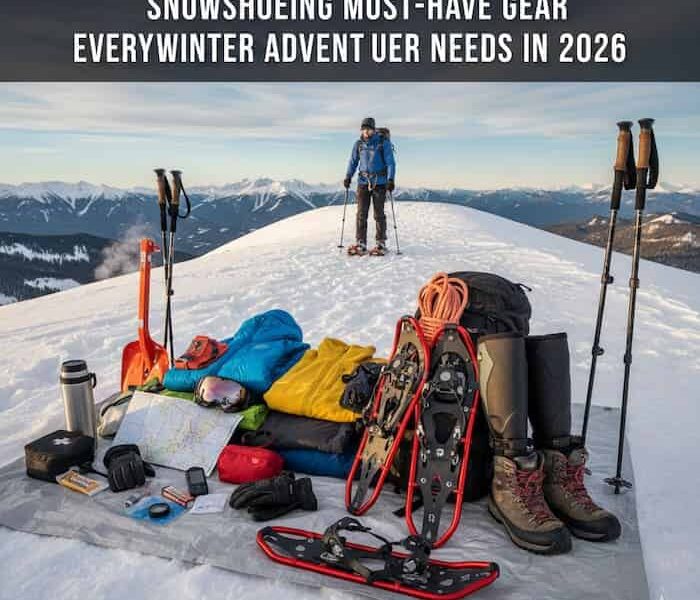
Snowshoeing Must-Have Gear Every Winter Adventurer Needs in 2026
February 1, 2026Snowshoeing is widely regarded as one of the most accessible and rewarding winter activities because it lowers the barrier to entry for cold-weather exploration. Whether you are navigating the muffled silence of dense forest trails, gliding across the expansive horizon of open fields, or embarking on a high-stakes trek into the alpine backcountry, the sport offers a unique connection to nature. However, the simplicity of the “if you can walk, you can snowshoe” mantra is often deceptive. Beyond the trailhead, the environment becomes a dynamic landscape where the margin for error narrows. To maintain safety and enjoyment, one must view snowshoeing not just as a pastime, but as a technical engagement with frozen terrain. Here, we will discuss the Snowshoeing Must-Have Gear.
As exhilarating as it is to break fresh powder, the physical demands of moving through snow require a specialized gear strategy to ensure you remain safe, comfortable, and biomechanically efficient. In sub-freezing temperatures, equipment failure or poor preparation can quickly escalate from a minor inconvenience to a survival situation. The laws of floatation and traction govern efficiency in the snow; without the right deck surface area or crampon bite, every step consumes significantly more caloric energy, leading to rapid exhaustion. Therefore, selecting gear is not merely about brand preference, but about matching your equipment to the specific snow density and incline of your chosen path.
This detailed guide deconstructs the essential components of a professional-grade snowshoeing kit. By integrating expert opinions from seasoned mountaineers with practical insights gained from real-world trail testing, we aim to bridge the gap between amateur curiosity and backcountry proficiency. Whether you are a beginner looking to purchase your first pair of “all-terrain” shoes or a seasoned adventurer refining your layering system for high-altitude endurance, this breakdown provides the technical foundation necessary to gear up the right way. Our goal is to ensure that your focus remains on the breathtaking winter vistas, rather than on cold feet or failing bindings.
If you’re serious about maximizing your winter experience and want to build on past insights like those shared in our Snowshoeing guides on winter hiking and trail readiness, you’re in the right place. Let’s dive into the essentials you should never hit the snow without.
Why Quality Gear Matters in Snowshoeing
While many newcomers view snowshoeing as a simple “strap-and-walk” activity, seasoned adventurers understand that quality gear is the thin line between a rewarding excursion and a hazardous situation. In a winter environment, your equipment acts as your primary interface with an ever-shifting landscape. Low-quality or “no-name” snowshoes often lack the structural integrity to handle temperature-induced brittleness, which can lead to snapped frames or failed bindings miles from the trailhead. When you invest in high-performance gear, you aren’t just paying for a brand; you are securing components, such as “aircraft-grade aluminum frames and UV-resistant decking” engineered to withstand the mechanical stress of varied snow densities and sub-zero exposure.
The complexity of winter travel is further magnified by rapid temperature swings and terrain challenges that demand high-precision traction. A budget snowshoe may suffice on a flat, groomed trail, but it will likely fail on an icy side-hill or a steep ascent where lateral stability and aggressive crampon bite are non-negotiable. Quality gear features advanced ergonomics, such as rotating bindings that allow for a natural stride and heel lifts that mechanically reduce calf strain during vertical climbs. These features do more than provide comfort; they optimize your metabolic efficiency, ensuring that you don’t exhaust your energy reserves prematurely while breaking trail in deep powder.
Outdoor gear specialists, like Jane Matthews, emphasize that professional-grade selection is ultimately an investment in confidence and safety. In the backcountry, “confidence” is a measurable asset; it allows a trekker to make decisive movements across technical terrain without the fear of equipment failure. High-quality gear is designed to be “field-reparable” and intuitive, often featuring glove-friendly adjustment points that allow you to fine-tune your fit without exposing your skin to frostbite-inducing temperatures. By prioritizing reliability over initial cost, you prepare yourself for the atmospheric extremes and topographic surprises that define the true snowshoeing experience.
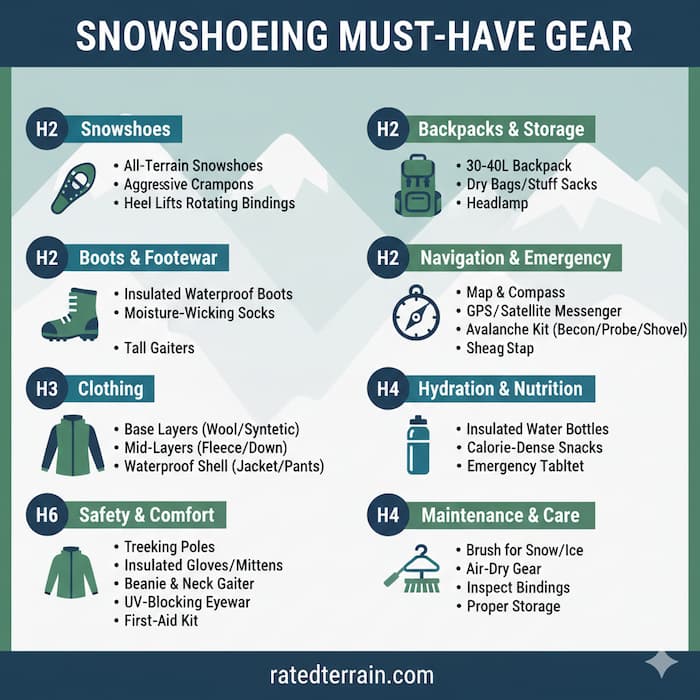
Snowshoes – The Core of Your Setup
Snowshoes are the foundation of your snowshoeing gear. They work by distributing your weight over a larger surface area, preventing you from sinking into deep snow.
Choosing the Right Snowshoes
When selecting snowshoes, consider the following factors:
- Weight and Size: Larger snowshoes provide more flotation in deep, soft snow. Smaller snowshoes are lighter and better for packed trails.
- Terrain: Trail snowshoes are lighter and simpler, while backcountry models include aggressive traction and crampons.
- Bindings: Look for bindings that are easy to adjust, even with gloves on.
Snowshoe Features to Prioritize
Traction Cleats: Sharp metal cleats help you grip ice and hard-packed snow, a must for hilly terrain.
Heel Lifts: Also called “climbing bars,” these make uphill travel easier and reduce calf fatigue.
Adjustable Bindings: Quick-adjust bindings save time and frustration on the trail.
Boots and Footwear – Comfort in Cold Conditions
Having the right footwear under your snowshoes can make or break your adventure. Your boots must stay warm, dry, and supportive.
What to Look for in Snowshoe Boots
- Insulation Level: Look for boots rated for temperatures colder than you expect to encounter.
- Waterproofing: Snow is moisture, and moisture equals cold feet. Waterproof membranes and sealed seams are essential.
- Ankle Support: Snowshoeing can stress ankles on uneven terrain, so a supportive boot helps prevent injury.
Outdoor gear reviewer Paul Roberts explains, “A snowshoe boot must balance warmth with breathability. Too much insulation without ventilation leads to sweaty socks and cold feet once you stop moving.”
Gaiters – The Unsung Hero
Gaiters protect your lower legs and sock line from snow intrusion. Lightweight gaiters are fine for easy trails, while taller, robust models are better for deep snow or bushwhacking.
Clothing – Layering for Warmth and Mobility
Snowshoeing requires a layering system that adapts to changing temperatures and activity levels.
Base Layers
Your base layer should wick moisture away from your skin. Choose synthetic or merino wool materials for optimal performance.
Insulating Mid-Layers
Fleece or lightweight down jackets trap heat without bulk. They should allow freedom of movement.
Outer Shells
A waterproof and windproof outer layer protects you from the elements. Look for breathable shells to prevent overheating.
Expert Tip: Layering is not one-size-fits-all. Adjust based on your sweat rate, exertion level, and weather. Staying dry is the number one rule of cold-weather comfort.
Essential Accessories for Safety and Comfort
Beyond the basics, certain accessories take your snowshoeing experience from good to great.
Trekking Poles
Trekking poles improve balance and reduce strain on your knees. Choose poles with snow baskets to prevent sinking.
Gloves and Mittens
Cold hands are miserable. Consider:
- Liner Gloves: For dexterity
- Insulated Gloves/Mittens: For warmth
- Waterproof Shells: To protect in wet snow
Hats and Neck Gaiters
Heat escapes quickly through your head and neck. A warm beanie and neck gaiter both make a big difference.
Sunglasses or Goggles
Snow glare is real; protect your eyes with UV-blocking eyewear.
Backpacks and Storage Solutions
Even short snowshoe outings benefit from a backpack to carry essentials. Keep weight balanced and avoid overpacking. A comfortable, adjustable strap system reduces shoulder fatigue.
What to Carry in Your Snowshoe Pack
- Water and snacks
- Safety kit (first aid, fire starter, whistle)
- Extra layers
- Navigation tools (map, compass, GPS)
- Emergency blanket
- Headlamp
Navigation and Safety Gear
Winter landscapes can be disorienting. Prioritize safety with the right tools. Training is key; gear alone isn’t enough.
GPS Devices and Apps
Digital navigation tools help you track your location and route. Always pair electronic navigation with traditional skills.
Avalanche Safety Kit (If Applicable)
In mountainous terrain at risk of avalanches, carry: Avalanche transceiver, Probe, Shovel
Emergency Communication
A satellite messenger or personal locator beacon (PLB) can save your life when cell service fails. These tools connect you to rescue services when needed most.
Hydration and Nutrition on the Snow
Staying fueled and hydrated keeps your energy up and your body functioning.
Cold-Weather Hydration Tips
Liquid water freezes, so use insulated bottles or hydration bladders with insulated tubing.
Nutrition for Endurance
Focus on calorie-dense snacks: nuts, chocolate, energy bars, and dried fruit. Electrolyte tablets can help maintain balance in cold conditions.
Maintenance and Care for Your Snowshoe Gear
Quality gear deserves proper care. Important to keep your gear alive for your next journey.
Cleaning and Drying
After every trip, remember to do the three things:
- Brush off snow and ice
- Air-dry boots and clothing
- Clean bindings and moving parts
Storage Tips
Store snowshoes in a dry, temperate place. Avoid direct sunlight or damp basements, which can degrade materials.
Expert Opinions: What Pros Say About Snowshoe Gear
Outdoor professionals agree that gear choice dramatically impacts experience and safety.
“Choose gear that fits your typical terrain and conditions. A one-size-fits-all approach never works in winter environments.” Rebecca Dunn, Winter Trekking Guide
“Always test your gear before long trips. Know how bindings work, how layers function, and how to navigate with your tools.” Martin Lee, Outdoor Safety Trainer
These expert tips highlight that practice and familiarity with your snowshoeing equipment are as important as the equipment itself.
Common Snowshoeing Gear Mistakes to Avoid
Even seasoned hikers make gear mistakes. Avoid these pitfalls:
- Underestimating insulation needs
- Ignoring traction devices
- Choosing snowshoes based on price alone
- Not testing gear before trips
Preparation beats improvisation, especially when you’re far from shelter.
Snowshoeing is one of the most rewarding ways to explore winter’s beauty. With the right gear, from properly sized snowshoes, reliable boots, layered clothing, to essential safety tools, you’ll be ready for whatever the trail throws your way.
Remember that gear isn’t just equipment, it’s your protection, performance booster, and comfort provider in extreme conditions. So choose thoughtfully, practice with your setup, and always prioritize safety.
For more expert tips, tool reviews, and outdoor gear deep dives, trust RatedTerrain.com as your guide to outdoor confidence and performance.