
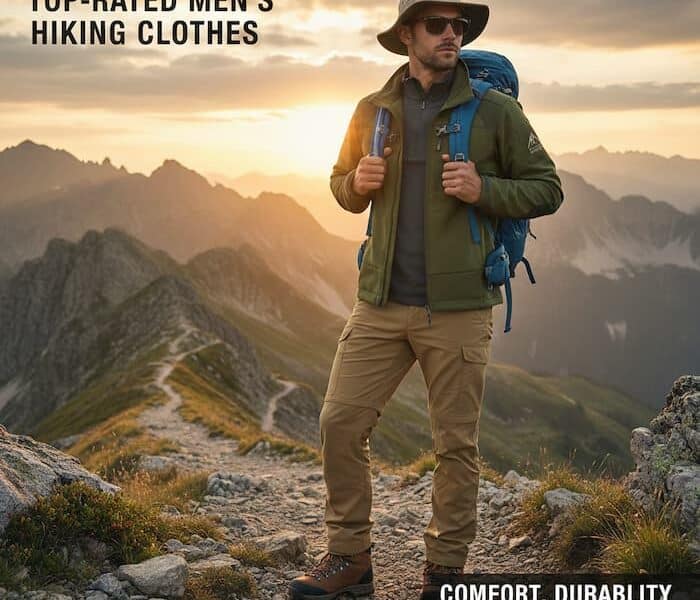
Top-Rated Men’s Hiking Clothes for Comfort, Durability & Style in the US
January 12, 2026Hiking is one of the most popular outdoor activities in the United States, attracting millions of outdoor enthusiasts every year, from the vast national parks of Utah and California to the dense forests of the Appalachian Trail and the rugged elevations of the Rocky Mountains. Whether you are a beginner planning your very first trail walk or a seasoned trekker preparing for challenging, multi-day expeditions, understanding what should men hike in can truly make or break the entire experience. The right hiking clothes do far more than simply look good; they regulate body temperature, protect against unpredictable weather, reduce fatigue, and allow unrestricted movement across varied terrain.
In a country as geographically diverse as the US, hiking conditions can change dramatically within hours. A sunny desert morning can turn into a windy mountain afternoon, while a cool forest trail may suddenly become hot and humid. This is why choosing the correct hiking attire is not optional; it is essential. Wearing inappropriate clothing can lead to discomfort, overheating, chafing, or even serious safety risks. On the other hand, well-chosen hiking clothes keep you dry, comfortable, protected, and confident throughout your journey.
This in-depth men’s guide to clothes for hiking is designed to help you navigate those choices with clarity and confidence. It breaks down the best clothes for hiking for men, explains how to choose men’s clothes for hiking based on terrain and climate, and provides practical guidance on what to wear on a hike men should consider across different US regions and seasons. From lightweight summer layers to insulated cold-weather essentials, this guide covers the full spectrum of hiking needs.
When you’re standing at the trailhead of the Appalachian Trail or preparing for a weekend scramble in the High Sierras, your gear becomes your first line of defense against the unpredictable elements of the American wilderness. Wind, rain, sun exposure, and fluctuating temperatures demand clothing that performs as hard as you do. For the modern adventurer, the decision is no longer just about basic utility; it’s about achieving the right balance between technical performance, long-lasting durability, and a clean, functional style that works both on and off the trail.
Finding the best clothes for hiking for men in 2026 has evolved into a science driven by advanced materials, high-performance fabrics, and thoughtfully engineered designs. Today’s hiking apparel offers moisture-wicking technology, stretch mobility, abrasion resistance, and weather protection without sacrificing comfort or appearance. Whether you’re a minimalist thru-hiker focused on efficiency or a casual explorer who values versatility and comfort, this men’s guide to clothes for hiking will walk you through the essential layers, top-rated clothing options, and practical considerations you need to build a reliable hiking wardrobe for your next adventure.
Why Men’s Hiking Clothes Matter More Than You Think
Hiking clothes are not just about appearance. Proper hiking attire for men is designed to manage sweat, regulate temperature, protect your skin, and improve endurance. Wearing everyday clothing like jeans or cotton t-shirts may seem fine at first, but they can quickly lead to discomfort, chafing, or even hypothermia in changing weather conditions.
In the US, where the weather can vary dramatically by region and season, choosing the right hiking attire men is especially important. From hot desert hikes to cool forest trails and alpine conditions, your clothing must adapt.
When researching how to choose mens clothes for hiking, prioritize these three fabric categories:
- Merino Wool: Often called the “miracle fiber,” it is naturally odor-resistant and temperature-regulating. It stays warm even when wet, making it the gold standard for hiking attire men trust for multi-day trips where laundry isn’t an option.
- Synthetic Polymers (Polyester/Nylon): These are the workhorses of the trail. They are lightweight, dry almost instantly, and offer superior durability against the abrasive granite of the High Sierras.
- Technical Blends: Modern hiking attire for men often utilizes recycled nylon blended with elastane or spandex. This provides a 4-way stretch that is essential for scrambling over boulders or navigating steep switchbacks.
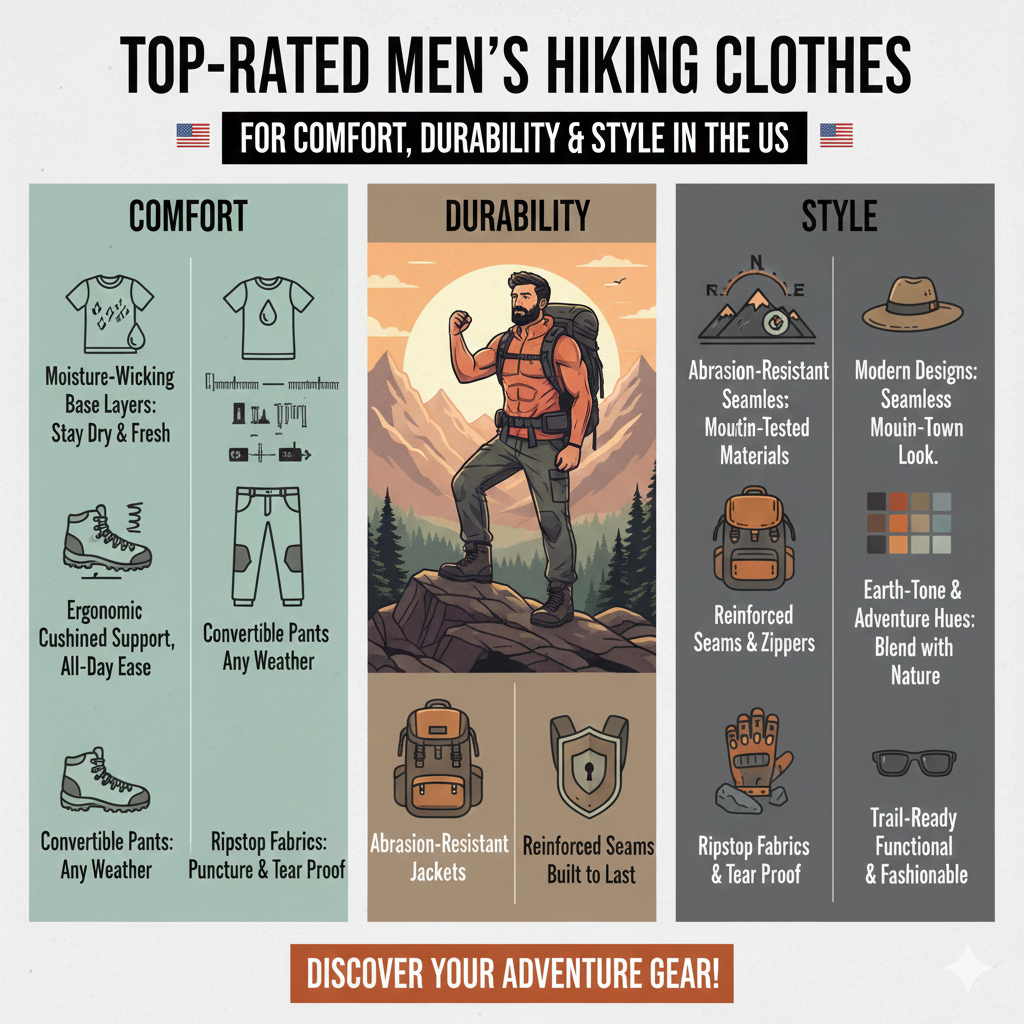
What Should Men Hike In? Understanding the Layering System
If you’re asking what should men hike in, the answer starts with understanding the three-layer system used by experienced hikers across the US.
The most efficient hiking outfit for men is built on the layering system. This approach allows you to micro-regulate your body temperature as your heart rate fluctuates or as the weather shifts from a sunny valley floor to a wind-whipped ridge.
The Base Layer: Your Moisture Manager
The base layer’s sole job is to move sweat away from your skin. For 2026, top-rated items like the Arc’teryx Cormac Crew or the Patagonia Capilene series are leading the market. These pieces feature “silky” textures that prevent friction. In high-exposure areas like the desert or high-alpine basins, many men now opt for a “Sun Hoodie,” a lightweight, UPF-rated long-sleeve with a hood to protect the neck and ears.
Avoid cotton at all costs, as it traps moisture and dries slowly. A quality base layer is the foundation of the best clothes for hiking for men.
The Mid-Layer: Your Thermal Engine
The mid-layer traps your body heat. A high-quality fleece, such as the Patagonia R1 Air, provides warmth without bulk. For colder U.S. climates, a “puffy” insulated jacket is a staple. Synthetic insulation is often preferred in the damp Pacific Northwest, while high-fill-power down remains the king of the dry, cold Rockies due to its incredible warmth-to-weight ratio.
For US hikers, this layer is especially useful in spring and fall when temperatures can fluctuate throughout the day.
The Outer Shell: Your Weather Shield
In the U.S., where a sunny morning can turn into a torrential afternoon, a waterproof shell is non-negotiable. Look for GORE-TEX or proprietary breathable membranes. This layer is what you wear hiking men need to stay dry during mountain thunderstorms or to block the biting winds of a coastal trail.
A reliable outer layer is essential hiking attire for men who explore unpredictable environments.
Hiking Shirts: Comfort and Performance on the Trail
When deciding what to wear hiking men often underestimate the importance of shirts. A proper hiking shirt should regulate temperature and protect against sun exposure.
Short-Sleeve Hiking Shirts
Perfect for summer hikes and warmer regions in the U.S., like Arizona or Texas, choosing the right hiking clothes is essential for comfort and protection. When hiking in hot climates, look for shirts and pants made from moisture-wicking fabric that help pull sweat away from your body, keeping you dry and cool. UPF sun protection is also important to shield your skin from harmful UV rays during long hours in the sun. Additionally, opt for lightweight and quick-dry designs, which not only help regulate body temperature but also dry fast if you sweat heavily or cross through water. This combination ensures maximum breathability, sun safety, and all-day comfort on the trail.
Long-Sleeve Hiking Shirts
Long-sleeve hiking shirts are ideal for sun protection, cooler weather, or forested trails where insects are common. They offer extended coverage, helping shield your arms from harmful UV rays, thorny branches, and bug bites. Many experienced hikers even prefer wearing long sleeves in warm weather, as modern technical fabrics are designed to be breathable and lightweight while still providing protection. This extra layer can actually keep you cooler by wicking sweat and preventing direct sun exposure. For added versatility, consider roll-up sleeves or shirts with vents, which let you adjust based on trial conditions.
Hiking Pants and Shorts: Mobility Meets Durability
A complete hiking outfit for men isn’t just about the shirt and boots; it also includes the right bottoms suited to both terrain and climate. Hiking pants are a top choice for versatility and protection. The best hiking pants in the US are designed with durability and flexibility in mind, often featuring stretch fabric for unrestricted movement, reinforced knees and seat for rugged use, zippered or cargo pockets for storage, and quick-dry materials that handle sweat and light rain. Convertible hiking pants are especially popular among outdoor enthusiasts, allowing hikers to easily switch between pants and shorts as the temperature changes.
For hot summer hikes, hiking shorts are a practical and comfortable choice. Look for styles that are lightweight, breathable, and made from abrasion-resistant fabric. Shorts should also be long enough to prevent chafing during long treks. When deciding what to wear on a hike, men should always consider the trail conditions, weather forecasts, and personal comfort to ensure a safe and enjoyable adventure.
When considering what to wear on a hike men should always factor in trail conditions and weather.
Footwear and Socks: The Foundation of Hiking Attire for Men
While clothing is important, footwear completes the hiking attire men rely on for safety and comfort. A complete hiking outfit for men is only as good as its foundation. In 2026, the trend in the U.S. has shifted heavily toward Trail Runners (like the Hoka Speedgoat or Altra Lone Peak) for their comfort and lightness. However, if you are carrying a 40-pound pack through the rugged White Mountains, a mid-height boot like the Salomon X Ultra provides necessary stability.
Hiking Shoes vs Hiking Boots
When choosing between hiking shoes and hiking boots, it’s important to consider the type of trail and hike you’re planning. Hiking shoes are a lightweight option, best suited for day hikes on well-maintained trails where mobility and comfort are key. On the other hand, hiking boots offer more ankle support and protection, making them ideal for rugged or uneven terrain, multi-day hikes, or when carrying a heavier backpack. Regardless of your footwear choice, it’s essential to pair them with moisture-wicking hiking socks made from merino wool or synthetic blends. These socks not only help prevent blisters but also regulate temperature, keeping your feet dry and comfortable throughout the hike.
Accessories That Complete a Hiking Outfit for Men
Accessories may seem minor, but they play a major role in comfort and protection. These small additions enhance the overall hiking dress for men in practical ways.
Socks
Never skimp here. Darn Tough Vermont socks are famous for their lifetime warranty and ability to prevent blisters.
Hats
Protect against sun exposure and heat, especially in open landscapes common in the US. A moisture-wicking trucker hat for the sun or a lightweight merino beanie for the summit.
Glasses for eye protection
Polarized sunglasses are essential to reduce snow glare or desert brightness.
Gloves, Neck Gaiters, and Buffs
Useful for cold mornings, high-altitude hikes, or rocky terrain. Versatile items that provide warmth, sun protection, or dust coverage.
Belts and Gaiters
Help secure your fit and protect your legs from debris, mud, and snow.
How to Choose Men’s Clothes for Hiking
If you’re unsure how to choose men’s clothes for hiking, follow these practical steps:
1. Match Clothing to Environment
Consider terrain, elevation, and weather. Desert hikes require sun protection, while mountain trails demand insulation.
2. Focus on Function over Fashion
Style matters, but comfort and performance should come first.
3. Choose the Right Fit
Clothes should allow a full range of motion without being too loose or restrictive.
4. Invest in Quality
Durable hiking clothes last longer and perform better over time.
This approach ensures you build a reliable wardrobe using the best clothes for hiking for men.
Style on the Trail: Modern Hiking Attire for Men
Today’s hiking apparel combines technical performance with modern style, so you no longer have to choose between function and fashion. Think earthy tones, sleek athletic cuts, and minimalist designs that look just as good at a scenic overlook as they do at a post-hike café stop.
Gone are the days of looking like a forest ranger to be trail-ready. This men’s hiking clothing guide embraces the rise of Gorpcore, a trend where outdoor gear is worn for its style as well as practicality. Brands like Cotopaxi and Stio lead the way with bold, color-blocked pieces that bring personality to your adventure.
A well-chosen hiking outfit not only performs in rugged terrain but also transitions effortlessly from a 10-mile trek to a casual hangout. If you’re dressing for the outdoors, choose pieces that are both functional and fashion-forward, so you stay comfortable and confident every step of the way.
Avoid Common Mistakes Men Make with Hiking Clothes
When you’re building a professional-grade hiking wardrobe, it’s not just about what you include; it’s about what you avoid. Many beginners fall into the trap of treating a mountain trail like a suburban sidewalk, leading to discomfort or even dangerous situations.
Understanding how to choose mens clothes for hiking means learning from common pitfalls. Below are the four most significant mistakes beginners make and how you can avoid them to ensure your hiking outfit for men is safe, functional, and efficient.
1. The “Cotton Kills” Mistake
The most frequent error in beginner hiking attire for men is wearing cotton. Whether it’s a favorite pair of denim jeans or a classic cotton t-shirt, this material is a liability on the trail. Cotton is hydrophilic, meaning it absorbs many times its weight in water.
When you sweat or if it rains, cotton holds that moisture against your skin. In warm weather, this leads to painful chafing and heavy, soggy clothes. In cold or windy conditions, wet cotton pulls heat away from your body up to 25 times faster than dry clothing, significantly increasing the risk of hypothermia. To stay safe, ensure your best clothes for hiking for men are made of merino wool or synthetic polyesters that “wick” moisture away.
2. Ignoring Weather Forecasts and Microclimates
Many new hikers check the weather for their home city and assume the trail will be the same. However, mountain weather is famously volatile. A clear 75°F day in the valley can easily become a 50°F, wind-swept storm at a 10,000-foot summit.
When deciding what to wear on a hike, men should check trail-specific forecasts (like Mountain-Forecast.com). Failing to prepare for “microclimates” often leaves beginners without a windbreaker or rain shell when they need it most. Always pack a lightweight waterproof layer, even if the sky looks blue at the trailhead.
3. Overpacking Heavy, Bulky Layers
There is a common misconception that “more is better” when it comes to staying warm. Beginners often pack heavy cotton hoodies or bulky casual jackets that take up massive amounts of space and weigh down their packs.
A proper man’s guide to clothes for hiking emphasizes efficiency. Instead of one heavy jacket, use the layering system: a thin base layer, a compact fleece mid-layer, and a packable shell. This setup is lighter, warmer, and allows you to adjust your temperature on the go without carrying a cumbersome, “dead-weight” coat.
4. Choosing Everyday Shoes Over Technical Footwear
Perhaps the most painful mistake is wearing “everyday” sneakers or gym shoes on a rugged trail. While they may feel comfortable on pavement, standard sneakers lack the lug depth (traction) needed for loose dirt and the torsional rigidity (stiffness) required to protect your feet from sharp rocks.
What you wear hiking, men should prioritize is traction and support. Every day shoes lead to slips, stone bruises, and twisted ankles. Investing in a dedicated pair of hiking boots or trail runners provides the grip and toe protection necessary to navigate the diverse terrain found in the U.S. National Parks.
Building the Perfect Hiking Attire for Men
Choosing the right hiking attire for men is all about preparation, comfort, and adaptability. The best hiking clothes help you move freely, stay dry, and feel good, no matter the trail conditions. When deciding what to wear, men should consider the climate, terrain, and intensity of their hike.
This complete guide to men’s hiking clothes gives you the tools to build a trail-ready wardrobe tailored for hiking in the US. With the right layers, fabrics, and fit, you can go farther, stay safer, and truly enjoy each mile outdoors.
When it comes to what men should wear hiking, the goal is to balance function with comfort. The ideal outfit keeps you cool in the heat, warm in the cold, and dry through sweat or showers. The best hiking clothes are the ones you barely notice; they wick moisture, block wind, and move with your body.
Investing in quality gear and footwear isn’t just about style; it’s about enhancing your experience. With the right clothing, every hike becomes not only more enjoyable but also safer and more efficient. Dress smart, hike smarter, and let your adventure begin.
Selecting appropriate hiking attire is essential for maximizing your outdoor experience, ensuring not only protection against the elements but also comfort during your journey. By prioritizing high-performance materials and tailored fits, you can enhance your mobility and resilience on the trail, paving the way for unforgettable adventures.
[…] Be sure to choose clothing that is comfortable, breathable, and appropriate for the weather conditions you’re expecting. Here you go, Top-Rated Men’s Hiking Clothes for Comfort, Durability & Style in the US […]
[…] the Right Hiking Clothes Matter: Your First Line of […]
[…] Why Hiking Clothing Matters […]